
How to Stop Flipping Wrists at Impact in Golf
Imagine standing on the tee, ready to crush your drive. You swing back smooth, but at impact, your wrists flip. The ball hooks left or slices right. Frustration builds. Many golfers face this issue. It robs distance and accuracy. Good news exists. You can fix it. This guide shows you how. As a seasoned golf enthusiast with years of experience, I share practical steps. Stop the flip. Improve your game.
Understanding Wrist Flipping in Golf
Golfers often hear about wrist action. What does flipping mean? Flipping happens when wrists roll over too early at impact. Your lead wrist cups or bows incorrectly. The clubface closes or opens. Shots go off line.
Industry experts define wrist flip as premature release of wrist angles. It occurs right before or at ball contact. Proper swings maintain a flat lead wrist. Flippers lose that flatness.
Why care? Flipping causes inconsistency. You hit fat shots or thin ones. Power leaks out. Distance suffers. Accuracy drops. Pros avoid flips. They strike pure.
Based on widely accepted industry standards, a neutral wrist at impact promotes solid contact. It aligns clubface square. Ball flies straight.
Observe your swing. Record it on video. Look for wrist breakdown. Lead hand rotates too soon. That’s the flip.
Common signs include divots after the ball. Or topped shots. Hooks for right-handers. Slices if flip compensates.
Grasp this concept first. Knowledge powers change.
Common Causes of Wrist Flipping
Fixes start with causes. Why do wrists flip? Several factors play in.
Poor grip tops the list. Weak grip encourages flipping. Hands rotate to square the face. Strong grip might do opposite, but flip compensates.
Setup issues matter. Ball position too far back. Stance too narrow. Weight shifts wrong.
Swing path problems. Over-the-top moves force flips. Inside-out paths sometimes too.
Tension builds flips. Gripping too tight. Arms stiffen. Wrists overwork.
Lack of body rotation. Hips stall. Arms take over. Wrists flip to generate speed.
According to professionals, early extension worsens it. Hips thrust forward. Hands drop. Flip follows.
Fatigue plays a role. Tired muscles lose control. Wrists compensate.
Equipment fits poorly. Shaft too flexible. Clubhead heavy. Forces unnatural moves.
Identify your cause. Self-assess. Or seek coach input.
The Importance of Proper Grip to Prevent Flipping
Grip sets the foundation. Get it right. Stop flips.
Hold club in fingers, not palm. Lead hand (left for righties) places club diagonal across fingers.
Rotate hand so V between thumb and index points to right shoulder.
Trail hand overlaps or interlocks. V points same way.
Neutral grip reduces flip need. Weak grips invite rolls.
Check grip pressure. Light like holding a bird. Too tight tenses wrists.
Professionals recommend re-gripping often. Maintain consistency.
Practice grip daily. Mirror check. Ensure Vs align.
Proper grip promotes flat wrist. Clubface squares naturally.
Correct Setup and Alignment
Setup influences swing. Align right. Reduce flips.
Feet shoulder-width. Knees flex slight.
Ball position varies. For irons, center. Drivers, forward.
Weight balances on balls of feet.
Shoulders square to target. Hips too.
Posture straight. Bend from hips. Arms hang natural.
According to industry experts, good posture allows rotation. Prevents arm dominance.
Align clubface first. Then body.
Use alignment sticks. Practice setup.
Consistent setup minimizes compensations. Wrists stay stable.
Building a Solid Backswing
Backswing builds power. Do it wrong. Flips happen.
Turn shoulders. Hips follow.
Keep wrists hinged natural. No early cock.
Arms stay connected to body.
Weight shifts to trail side smooth.
Avoid sway. Rotate around spine.
Based on manufacturer guidelines, maintain lag. Clubhead trails hands.
Flat wrist at top. No cupping.
Drill: Pause at top. Check wrist.
Solid backswing sets downswing right. Less flip risk.
Transition and Downswing Mechanics
Transition starts downswing. Key moment.
Shift weight to lead side. Hips initiate.
Arms drop. Maintain wrist angles.
Sequence: Hips, torso, arms, club.
Rush arms. Lose lag. Flip wrists.
Professionals stress shallowing club. Drop from inside.
Feel hands drop. Club lags behind.
Drill: Pump drill. Rehearse transition slow.
Master this. Impact improves.
Maintaining Wrist Position Through Impact
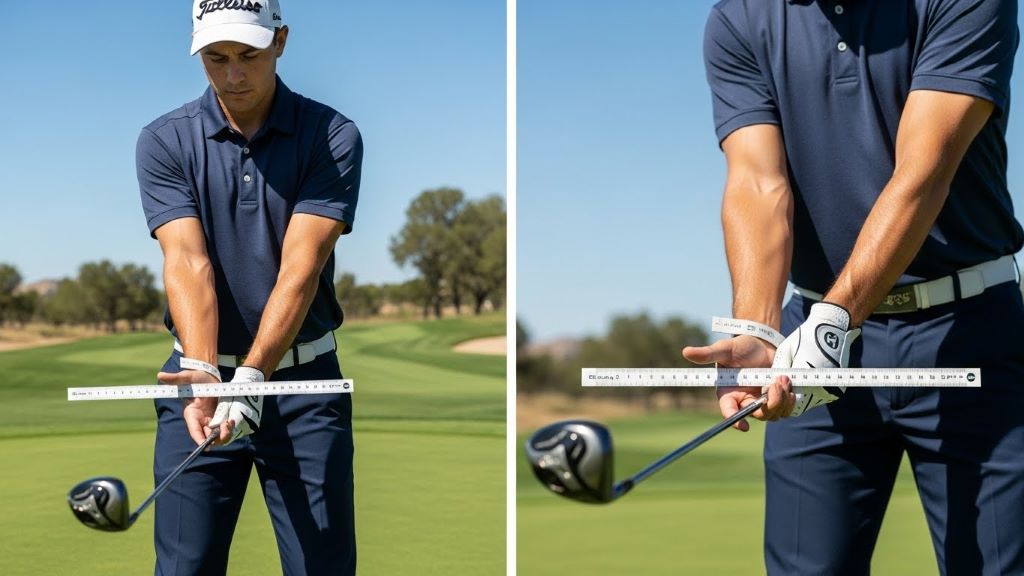
Impact defines success. Keep wrists flat.
Lead wrist flat or bowed slight.
Trail wrist bent back.
No rollover until after ball.
According to widely accepted standards, hold angles through hit.
Feel clubhead release post-impact.
Compress ball. Turf after.
Video swing. Frame by frame. Check wrists.
Consistent position. Pure strikes.
Drills to Stop Wrist Flipping
Practice drills fix habits. Try these.
Impact Bag Drill
Use impact bag. Swing into it.
Focus on flat wrist at contact.
Hit bag square. No flip.
Repeat 50 times.
Alignment Stick Drill
Place stick along forearms.
Swing. Keep contact.
Prevents early release.
Slow Motion Swings
Swing half speed.
Monitor wrist action.
Build muscle memory.
One-Handed Swings
Swing with lead hand only.
Maintain flat wrist.
Build control.
Towel Drill
Place towel under lead armpit.
Swing. Keep it there.
Promotes connection. Reduces flip.
Do drills regular. Track progress.
Exercises for Wrist and Forearm Strength
Strength aids control. Build it.
Wrist Curls
Hold dumbbell. Curl wrist up.
3 sets of 15.
Reverse too.
Forearm Roller
Roll weight up and down.
Strengthens grip.
Finger Extensions
Use rubber band. Spread fingers.
Counterbalances curls.
Pronation/Supination
Hold hammer. Rotate wrist.
Build rotation strength.
According to professionals, strong forearms hold positions.
Incorporate weekly. Prevent injury.
Role of Body Rotation in Preventing Flips
Body rotation powers swing. Rely on it.
Hips clear. Shoulders follow.
Arms passive.
Poor rotation. Arms overactive. Wrists flip.
Drill: Hip turn focus.
Swing with feet together. Force rotation.
Feel torque.
Industry experts say rotation generates speed. Not hands.
Master rotation. Wrists quiet.
Adjusting Swing Path and Plane
Path affects wrists.
Over-the-top. Pulls. Flips compensate.
Fix to inside-out.
Feel drop slot.
Use plane board.
Check path.
Shallow plane. Less flip.
Equipment Considerations
Equipment helps.
Shaft stiffness matches speed.
Too whippy. Encourages flip.
Grip size right. Not too thin.
Club fitting pros recommend custom fit.
Test different clubs.
Proper gear supports technique.
Mental Aspects and Visualization
Mind matters.
Visualize flat wrist impact.
Positive thoughts.
Breathe deep. Relax tension.
According to experts, mental rehearsal builds habits.
See success. Achieve it.
Common Mistakes and How to Avoid Them
Avoid pitfalls.
Gripping too hard. Loosen up.
Over-swinging. Shorten backswing.
Ignoring setup. Check always.
Rushing downswing. Slow transition.
Not practicing. Drill consistent.
Sidestep these. Progress faster.
Advanced Techniques for Seasoned Golfers
Advanced players refine.
Lag pressure point. Feel it.
Release timing. Post-impact.
Shaft lean forward.
Based on standards, pros deloft irons.
Practice punch shots. Hold wrists.
Elevate game.
Tracking Progress and Measuring Improvement
Measure gains.
Track fairways hit.
Ball flight straight?
Distance increase?
Video before/after.
Journal drills.
Consistent practice. See results.
Related:
How to Set Up Your Perfect Home Golf Practice Space
How to Increase Driving Distance Without Sacrificing Control
Why Custom Golf Clubs Are Worth the Investment
Conclusion
You now know how to stop flipping wrists at impact. Apply these steps. Practice drills. Build strength. Rotate body. Adjust mechanics. Your swing transforms. Hit straighter. Go farther. Enjoy golf more.
Take action now. Grab your clubs. Head to range. Implement one drill today. Your game improves. Share your progress in comments. Keep swinging!
FAQ
What causes wrist flipping in golf?
Poor grip, setup issues, lack of rotation, tension, and wrong swing path cause flips. Identify yours. Fix accordingly.
How does grip affect wrist flip?
Weak grip encourages rolling to square face. Neutral grip promotes stability. Hold light.
Can drills really stop wrist flipping?
Yes. Drills like impact bag and slow motion build muscle memory. Practice regular.
Do I need stronger wrists to prevent flipping?
Strength helps control. Do curls and rollers. But technique matters more.
Is equipment important in stopping flips?
Yes. Proper shaft and grip size support good mechanics. Get fitted.
How long to fix wrist flip?
Varies. Weeks with consistent practice. Track progress.
What if I still flip after trying?
Seek coach. Video analysis helps pinpoint issues.
Does body rotation help?
Absolutely. Proper rotation reduces arm dominance. Wrists stay quiet.
Are there mental tips?
Visualize flat wrists. Relax. Positive mindset aids.
Can beginners fix this?
Yes. Start with basics. Grip and setup first.
References: