
Golf Cart Motor Overheating Causes and Fixes
Golf cart motors can overheat for various reasons. When this happens, your cart may lose power or stop working completely. Understanding the causes helps you prevent damage and keep your cart running smoothly. This guide explains common overheating problems and provides practical solutions you can implement today.
Understanding Golf Cart Motor Heat
Golf cart motors generate heat during normal operation. Electric motors convert electrical energy into mechanical motion, producing heat as a byproduct. Similarly, gas-powered golf carts create heat through combustion and friction.
Normal operating temperatures vary by motor type. Electric motors typically run between 90 and 140 degrees Fahrenheit. Gas motors operate at higher temperatures, often reaching 180 to 220 degrees. However, when temperatures exceed these ranges, problems occur.
Excessive heat damages motor components quickly. Insulation breaks down, bearings wear faster, and electrical connections fail. Therefore, addressing overheating immediately protects your investment and prevents costly repairs.
Signs Your Golf Cart Motor Is Overheating
Recognizing overheating symptoms early prevents serious damage. The most obvious sign is reduced power or speed. Your cart may struggle on hills or refuse to reach normal speeds.
Strange smells often indicate overheating issues. You might notice burning odors from melting insulation or overheated components. Additionally, smoking from the motor compartment signals severe overheating that requires immediate attention.
Physical symptoms include hot surfaces that burn to touch. The motor housing becomes extremely warm, and plastic components may soften or melt. Some carts have temperature gauges or warning lights that alert you to problems.
Performance issues accompany overheating. The cart may run intermittently, losing power suddenly and then recovering. These symptoms worsen over time if left unaddressed.
Insufficient Airflow and Ventilation
Poor airflow is a leading cause of motor overheating. Golf cart motors need constant air circulation to dissipate heat effectively. Blocked vents prevent this cooling process.
Debris accumulation restricts airflow significantly. Grass clippings, leaves, dirt, and dust collect around the motor over time. This buildup acts like insulation, trapping heat inside. Furthermore, mud or water can cake onto cooling fins and vents.
Check your motor compartment regularly for obstructions. Remove any debris with compressed air or a soft brush. Clean cooling fins carefully to restore proper airflow. This simple maintenance prevents many overheating problems.
Some golf carts have cooling fans that assist ventilation. These fans can fail due to electrical issues or mechanical wear. Test your cooling fan regularly to ensure it operates when the motor runs. Replace failed fans promptly to maintain adequate cooling.
Overworking the Motor
Pushing your golf cart beyond its designed capacity causes overheating. Every cart has weight and terrain limitations. Exceeding these limits forces the motor to work harder and generate excessive heat.
Carrying too much weight strains the motor considerably. According to Consumer Reports, golf carts typically handle 800 to 1,200 pounds including passengers and cargo. Overloading forces the motor to draw more current and produce more heat.
Steep hills and rough terrain increase motor workload. Climbing grades requires significantly more power than flat surfaces. Consequently, frequent hill climbing without rest periods leads to overheating.
Extended high-speed operation also generates excessive heat. Motors designed for moderate speeds overheat when pushed to maximum speed continuously. Give your motor periodic breaks during demanding use.
Towing heavy loads multiplies the strain on your motor. Even within weight limits, towing creates additional resistance. Therefore, avoid towing whenever possible or upgrade to a cart designed for heavy-duty use.
Low or Dirty Lubrication
Proper lubrication reduces friction and heat in moving parts. Low lubricant levels cause metal components to grind together, creating excessive heat through friction.
Electric golf carts have fewer lubrication points than gas models. However, bearings and bushings still require periodic greasing. Check these points according to your manufacturer’s maintenance schedule.
Gas golf carts need regular oil changes. Old or dirty oil loses its lubricating properties and fails to absorb heat effectively. Change your oil at recommended intervals to maintain proper lubrication and cooling.
Transmission fluid also plays a cooling role. Low transmission fluid levels or degraded fluid contribute to overheating. Check fluid levels monthly and change according to specifications.
Using the wrong lubricant type causes problems too. Always use manufacturer-recommended products. Incorrect viscosity or additives may not provide adequate protection under operating conditions.
Electrical System Problems
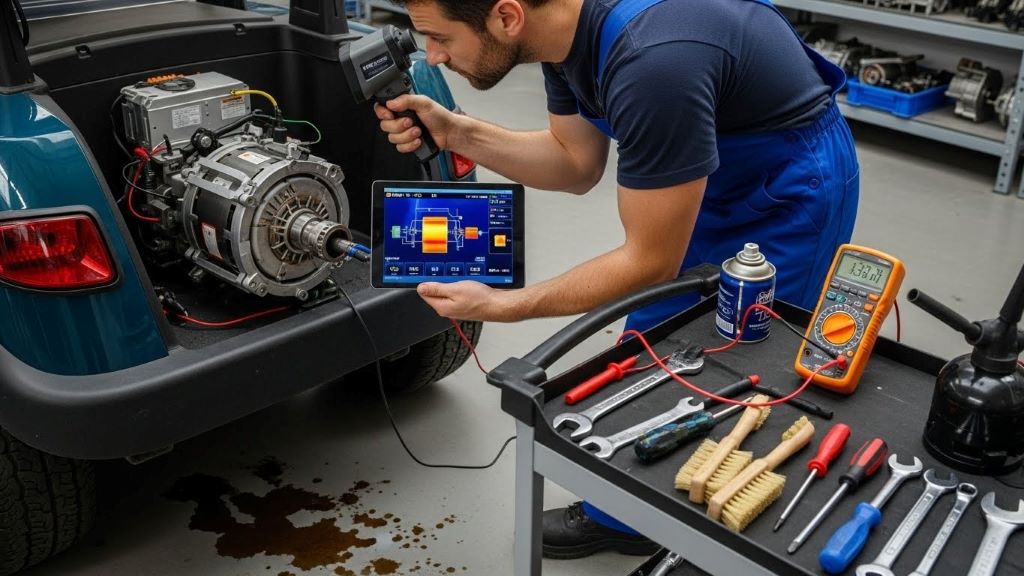
Electrical issues frequently cause motor overheating in electric golf carts. Loose connections create resistance, generating heat at connection points. This resistance forces the motor to work harder.
Corroded battery terminals restrict current flow. The motor compensates by drawing more current, which produces additional heat. Clean battery terminals regularly with a wire brush and apply protective coating.
Faulty wiring throughout the cart increases resistance. Damaged insulation, frayed wires, or loose connections all contribute to overheating. Inspect wiring periodically for signs of wear or damage.
Controller problems affect motor performance significantly. The controller regulates power delivery to the motor. A malfunctioning controller may send incorrect voltage or current levels, causing the motor to overheat.
Battery condition directly impacts motor operation. Weak or damaged batteries cannot supply adequate current. The motor struggles to perform, generating excess heat in the process. Test battery voltage regularly and replace weak cells promptly.
Worn or Damaged Motor Components
Internal motor wear causes overheating over time. Bearings deteriorate from normal use, creating friction and heat. Worn bearings make grinding or squealing noises before failing completely.
Brush wear in brushed motors increases resistance. As carbon brushes wear down, electrical contact becomes inconsistent. This inconsistency forces the motor to work harder and run hotter. Replace brushes before they wear completely.
Armature or stator damage affects motor efficiency. These core components can develop short circuits or insulation breakdown. Damaged windings draw excessive current and generate tremendous heat. Professional testing identifies these internal problems.
Magnets in some motors can weaken over time. Weak magnets reduce motor efficiency, requiring more current to produce the same power. Consequently, the motor runs hotter than normal.
Shaft misalignment creates uneven wear and friction. Misaligned components bind during rotation, generating heat. This problem often results from improper installation or accident damage.
Fixes for Overheating Golf Cart Motors
Addressing overheating requires systematic troubleshooting. Start with the simplest solutions before tackling complex repairs.
Begin by cleaning your motor compartment thoroughly. Remove all debris from vents, cooling fins, and fan blades. Use compressed air to blow out dust from hard-to-reach areas. This basic maintenance often resolves overheating issues immediately.
Reduce your cart’s workload when possible. Lighten cargo loads and avoid steep hills during hot weather. Take breaks during extended use to let the motor cool. Additionally, operate at moderate speeds rather than maximum performance.
Check and tighten all electrical connections. Clean corroded terminals with a wire brush and baking soda solution. Apply dielectric grease to protect connections from future corrosion. Replace any damaged wiring you discover.
Test your batteries under load to ensure adequate performance. Weak batteries should be replaced promptly. According to Forbes, maintaining quality batteries extends your cart’s life and prevents many performance issues.
Lubricate all moving parts according to your maintenance manual. Change oil and transmission fluid at recommended intervals. Use only manufacturer-specified lubricants for best results.
Inspect motor brushes if you have a brushed motor. Replace brushes when they reach minimum length specifications. This simple maintenance prevents motor damage and improves performance.
Consider installing additional cooling if overheating persists. Aftermarket cooling fans or heat sinks can supplement factory cooling systems. These upgrades help in demanding applications or hot climates.
Preventive Maintenance to Avoid Overheating
Regular maintenance prevents most overheating problems. Create a maintenance schedule and follow it consistently.
Clean your motor compartment monthly during active use. Remove debris before it accumulates and blocks airflow. This simple task takes minutes but prevents hours of troubleshooting later.
Inspect electrical connections quarterly. Look for corrosion, looseness, or damage. Address problems immediately rather than waiting for symptoms to appear.
Check fluid levels monthly in gas-powered carts. Top off as needed and change fluids on schedule. Similarly, test battery voltage and water levels in electric carts.
Listen for unusual sounds during operation. Grinding, squealing, or clicking noises indicate developing problems. Investigate and repair issues before they cause overheating or failure.
Operate your cart within its design parameters. Avoid overloading, excessive speeds, or continuous heavy use without breaks. Respectful operation extends motor life significantly.
Store your cart properly during off-seasons. Keep it in a dry, ventilated space away from extreme temperatures. Proper storage prevents many mechanical and electrical problems.
When to Seek Professional Help
Some overheating problems require professional diagnosis and repair. If basic troubleshooting does not resolve the issue, consult a qualified technician.
Internal motor damage typically needs professional assessment. Testing armature resistance, insulation integrity, and magnetic field strength requires specialized equipment. Attempting repairs without proper tools may cause additional damage.
Controller problems often exceed DIY capabilities. These electronic components are expensive and sensitive. Misdiagnosis can lead to unnecessary replacement costs. Therefore, let professionals test and repair controllers.
If your cart overheats despite cleaning, proper loading, and good maintenance, seek expert help. Persistent problems indicate underlying issues that require professional diagnosis.
Gas engine overheating may involve cooling system problems beyond basic maintenance. Radiator damage, water pump failure, or thermostat issues require mechanical expertise.
Safety should always be your priority. If you smell burning, see smoke, or notice melting components, stop using the cart immediately. Professional inspection prevents potential fires or complete motor failure.
Conclusion
Golf cart motor overheating stems from various causes including poor airflow, excessive workload, inadequate lubrication, electrical problems, and worn components. Recognizing symptoms early and addressing them promptly prevents costly damage. Regular maintenance, proper operation within design limits, and systematic cleaning keep motors running cool and efficient. When basic troubleshooting fails to resolve overheating, professional diagnosis ensures accurate repairs and prevents further damage. By following these guidelines and maintaining your golf cart properly, you can enjoy years of reliable, cool-running performance.
Frequently Asked Questions
What temperature is too hot for a golf cart motor?
Electric golf cart motors should not exceed 160 degrees Fahrenheit during operation. Gas motors can safely reach 220 degrees but should not go higher. If your motor feels too hot to touch for more than a second, it is likely overheating and needs attention.
Can I drive my golf cart if the motor is overheating?
No, you should stop driving immediately when the motor overheats. Continued operation causes permanent damage to motor components, bearings, and electrical systems. Let the motor cool completely before investigating the cause or attempting to drive again.
How often should I clean my golf cart motor compartment?
Clean your motor compartment at least monthly during regular use. If you drive in dusty conditions or mow grass frequently, clean it every two weeks. Regular cleaning prevents debris buildup that causes overheating and ensures optimal motor performance.
Will a new battery fix motor overheating problems?
New batteries may resolve overheating if weak batteries were the cause. However, batteries are just one potential factor. Check airflow, connections, and mechanical components before replacing batteries. Test existing batteries first to confirm they need replacement.
How much does it cost to repair an overheated golf cart motor?
Repair costs vary widely based on damage severity. Simple fixes like cleaning and new brushes cost 50 to 150 dollars. Complete motor replacement ranges from 500 to 1,500 dollars depending on motor type and cart model. Preventive maintenance is far less expensive than major repairs.
Related Topics:
How to Bend Golf Club Lie Angle at Home: Mastering the Art of Customization