How to Use Thiodoon Golf Club Brush and Groove Cleaner
Use the Thiodoon Golf Club Brush and Groove Cleaner by choosing the right bristles first. Brush loose dirt from the clubface, then clear stubborn grooves with the retractable spike. The tool combines nylon, steel wire, plastic, and a retractable cleaning feature. Its two-foot zipline also keeps the brush attached to your golf bag. This guide explains the safest and fastest cleaning technique for every club type. You can also explore the Thiodoon Golf Club Brush and Groove Cleaner before choosing your cleaning routine.
Key Takeaways
- Use the softer bristles for woods and other delicate club surfaces.
- Use the stiffer bristles for irons, wedges, and heavier dirt.
- Pull out the groove spike only when debris remains firmly packed.
- Clean clubs between shots when mud or grass affects the clubface.
- Use controlled strokes instead of aggressive scraping across the face.
- Dry the clubhead after wet cleaning to reduce moisture buildup.

Understand What Each Part Does
The Thiodoon cleaner works best when you treat each component differently. Its dual-brush design handles routine dirt, while the spike tackles packed debris. The retractable zipline also keeps the tool accessible throughout your round.
Soft Bristles for Delicate Cleaning
Start with the softer bristle side when cleaning woods or sensitive surfaces. These bristles remove grass, dust, and loose residue without unnecessary abrasion. Therefore, they suit quick maintenance after normal shots.
Stiffer Bristles for Irons
Use the stiffer bristles when dirt becomes embedded around iron grooves. They provide more scrubbing force against mud, grass, and compacted soil. However, keep your strokes controlled around polished surfaces.
Retractable Groove Spike
The spike handles debris that brushing cannot remove effectively. Use it inside individual grooves rather than dragging it across the entire face. This approach targets packed material while limiting unnecessary contact.
How to Clean a Golf Club Step by Step
Step 1: Inspect the Clubface
First, inspect the clubface before touching it with the brush. Identify loose dirt, wet grass, sand, or material packed inside grooves. This quick inspection determines which cleaning method you need.
Step 2: Choose the Correct Brush
Next, select the softer or stiffer brush according to the club and debris. Woods generally need gentler treatment than irons and wedges. When uncertain, begin gently and increase pressure only when necessary.
Step 3: Brush Across the Dirty Area
Hold the club securely and brush the dirty area using short controlled strokes. Work across the clubface instead of making unnecessarily aggressive movements. Continue until loose contamination separates from the surface.
Step 4: Clean the Grooves
For packed debris, use the retractable spike after brushing. Guide the tip through each affected groove with light pressure. Remove the loosened material before brushing the face again.
Step 5: Finish With a Wipe
Finally, wipe the clubface with a clean golf towel. This removes remaining moisture and fine particles after brushing. A dry face also makes the club ready for your next shot.
How to Use It During a Golf Round
On-course cleaning should take seconds rather than minutes. Clean the club immediately when mud or grass becomes visible on the hitting area. This habit prevents debris from becoming harder to remove later.
After a muddy shot, pull the brush from its retractable line and clean the face. Focus especially on wedges and irons used around wet ground. Then return the tool to its normal position before continuing play.
The retractable attachment makes frequent cleaning convenient during a round. You can keep the cleaner clipped to your golf bag instead of storing it inside a pocket. Consequently, quick maintenance becomes easier to remember.
Choosing the Right Cleaning Technique
| Club or Situation | Recommended Approach | Cleaning Focus |
|---|---|---|
| Driver | Use softer bristles | Dust, grass, light residue |
| Fairway wood | Use softer bristles | Loose dirt and grass |
| Hybrid | Use controlled brushing | Face and sole debris |
| Iron | Use stiffer bristles | Embedded dirt and grass |
| Wedge | Brush, then use spike | Packed groove debris |
| Wet mud | Remove bulk first | Face and individual grooves |
How to Clean Driver and Wood Clubfaces
Woods require more restraint because their surfaces can scratch more easily. Start with the softer bristles and use light, repeated strokes. Avoid using the groove spike unless debris genuinely requires targeted removal.
Also inspect the sole after playing from grass or rough. Dirt can collect underneath the club and transfer onto your equipment bag. A quick brushing routine keeps both the face and sole cleaner.
How to Clean Irons and Wedges
Irons and wedges usually benefit most from the stronger brush side. Their grooves frequently collect compacted grass, soil, and moisture after shots. Brush the face first, then inspect every groove.
If brushing leaves visible material behind, use the spike carefully. Move it through the groove rather than forcing it sideways. Afterward, brush away the loosened debris and wipe the clubface.
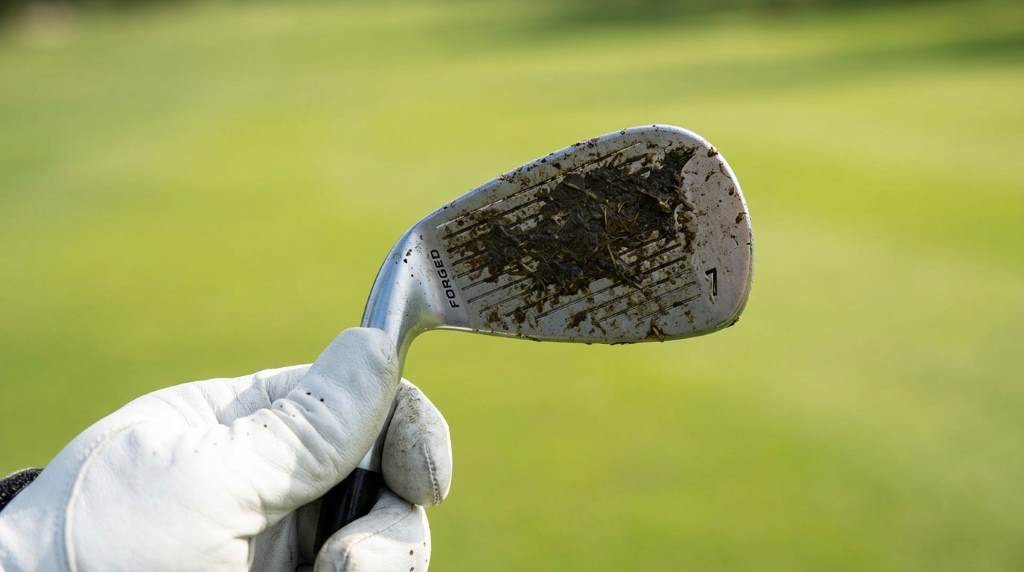
How to Remove Dried Mud and Caked-On Dirt
Dried mud needs a slightly different approach than loose grass. First, knock away loose material with the brush using moderate pressure. Then target remaining deposits with the groove spike.
Do not immediately attack hardened dirt with excessive force. Instead, loosen the deposit gradually through repeated brushing and controlled scraping. This method reduces unnecessary stress on the tool and club.
Cleaning After Wet or Muddy Conditions
Wet conditions can push soil deep into grooves and create stubborn buildup. Clean the club soon after the shot rather than waiting until the round ends. Fresh debris usually requires less effort to remove.
After cleaning, dry the clubface with a towel before returning it to the bag. This simple step limits moisture accumulation around the clubhead. It also keeps your equipment ready for immediate use.
How Often Should You Use the Cleaner?
Use the brush whenever visible debris affects the clubface or grooves. During muddy rounds, you may need to clean clubs after individual shots. In dry conditions, quick cleaning after several shots may prove sufficient.
At home, inspect your irons and wedges after every round. Pay particular attention to grooves that appear dark or visibly packed. Regular maintenance prevents heavy buildup from becoming your normal cleaning problem.
Common Mistakes to Avoid
- Using maximum pressure: Excessive force rarely improves cleaning enough to justify aggressive handling.
- Using the spike everywhere: Reserve the spike for debris that brushing cannot remove.
- Ignoring woods: Delicate surfaces deserve gentler treatment than heavily soiled irons.
- Skipping the final wipe: Brushing can leave moisture and loosened particles behind.
- Cleaning only before storage: On-course cleaning prevents debris from accumulating between shots.
- Dragging the spike sideways: Controlled groove-by-groove movement provides better precision.
How to Maintain the Thiodoon Cleaner
Brush debris away from the cleaner after heavy use. Check the bristles periodically for excessive bending, buildup, or damage. Keeping the tool clean helps maintain consistent brushing performance.
Also inspect the retractable line and attachment point regularly. Frequent pulling can eventually stress any retractable accessory. If the attachment shows damage, replace or repair it before relying on the tool during play.
What Competitor Guides Often Miss
Many golf-cleaning guides explain brushing but overlook the difference between cleaning loose debris and packed grooves. They also rarely explain how cleaning techniques should change between woods, irons, and wedges.
A stronger routine treats the brush as a multi-purpose maintenance tool rather than a simple scrubber. It combines inspection, correct bristle selection, targeted groove cleaning, and final drying. That sequence provides a more practical approach for real rounds.
When the Groove Spike Makes the Biggest Difference
The spike becomes most useful when debris sits below the brush bristles. This commonly happens after shots from wet grass, mud, or soft ground. Instead of repeatedly scrubbing the same area, target the obstruction directly.
However, the spike should complement the brush rather than replace it. Brush first, identify remaining debris, then use the spike selectively. Finish with another light brushing pass to remove loosened material.
Quick Cleaning Routine for Busy Golfers
- Inspect the clubface immediately after the shot.
- Choose the softer or stiffer brush.
- Brush away loose dirt using short strokes.
- Use the groove spike for stubborn debris.
- Brush again to remove loosened particles.
- Wipe the clubface with your towel.
- Return the cleaner to its retractable attachment.
Is the Thiodoon Cleaner Worth Keeping in Your Golf Bag?
Yes, especially if you regularly play in wet, muddy, or grassy conditions. Its combination of dual bristles, groove cleaning, and retractable attachment supports quick maintenance during play.
The main advantage comes from convenience rather than complicated technology. Keeping the cleaner attached to your bag makes frequent club maintenance easier. For golfers who value clean grooves, that accessibility can make the tool particularly useful.
Frequently Asked Questions
Can I use the Thiodoon brush on every golf club?
Yes, but use softer bristles and lighter pressure on delicate wood clubheads.
Should I use the spike on golf club grooves?
Yes, use the retractable spike when packed debris remains after normal brushing.
How often should I clean my golf clubs?
Clean visible debris during play and perform a more thorough inspection after each round.
Can the cleaner remove dried mud?
Yes, the brush and groove spike can loosen dried mud when you use controlled pressure.
Should I keep the brush attached to my golf bag?
Yes, the retractable attachment makes the cleaner easier to access between shots.
Final Verdict
The best way to use the Thiodoon cleaner is simple: brush first, target grooves second, and wipe last. Match the bristle strength to the club surface and avoid unnecessary force.
Make this short routine part of your normal golf preparation. Keep the cleaner accessible, clean debris before it hardens, and inspect grooves regularly. Start using these steps during your next round and make clean clubfaces part of your game.