How TaylorMade Distance Golf Balls Add Yardage
TaylorMade Distance Golf Balls add yardage through a fast core, low-drag aerodynamics, and efficient two-piece construction. The current Distance+ uses 77 compression and an Extended Flight 322-dimple pattern to promote speed. These features help golfers create faster ball speed while maintaining a stable, penetrating flight. However, the actual yardage gain depends on swing speed, strike quality, launch conditions, and spin.
Distance-focused golf balls can make a noticeable difference when your current ball produces excessive spin or inefficient flight. For golfers comparing TaylorMade Distance Golf Balls, the important question involves performance rather than marketing claims. This guide explains how the technology works and when it can genuinely add useful yardage.
Key Takeaways
- TaylorMade Distance+ uses a REACT Speed Core to promote high ball speed.
- Its two-piece construction supports efficient energy transfer on longer shots.
- The 77 compression balances speed, launch, and relatively soft feel.
- The Extended Flight 322-dimple pattern helps reduce aerodynamic drag.
- A distance ball works best when its launch and spin match your swing.
- Golfers should compare total distance, carry distance, dispersion, and short-game performance.
Why Distance Golf Balls Can Add More Yardage
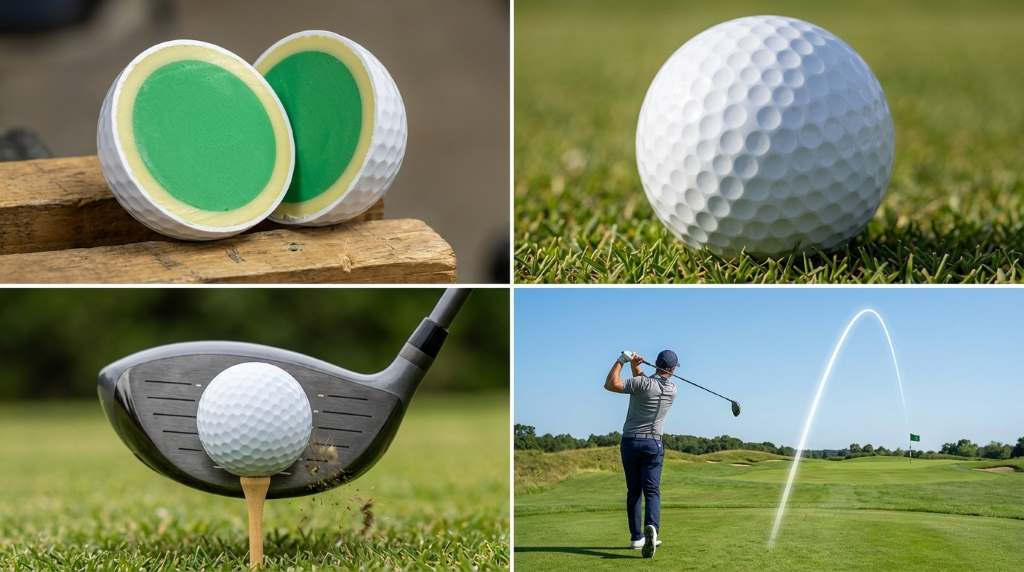
Every golf ball converts clubhead energy into ball speed during impact. Therefore, the ball’s construction can influence how efficiently that energy becomes useful distance.
A distance-oriented ball typically prioritizes velocity, launch efficiency, and aerodynamic performance. Instead of maximizing every performance category, it focuses heavily on producing longer shots.
TaylorMade builds its Distance+ around this philosophy. The design combines a REACT Speed Core, two-piece construction, and an aerodynamic dimple pattern.
That combination matters because distance does not come from one component alone. Instead, the core, cover, compression, and dimples work together throughout the ball’s flight.
The Core Creates the Initial Speed Advantage
REACT Speed Core
The REACT Speed Core provides the engine behind the Distance+ performance. It compresses during impact and releases stored energy as the ball leaves the clubface.
That energy transfer can increase ball speed when the golfer strikes the ball efficiently. Consequently, golfers may gain additional distance without changing their swing mechanics.
The benefit becomes particularly relevant for moderate swing speeds. These golfers often need a ball that compresses efficiently rather than one designed primarily for elite speeds.
Why Ball Speed Matters
Ball speed strongly influences how far a shot can travel. However, more speed alone does not guarantee longer shots.
Launch angle, spin rate, strike location, and clubhead speed also determine the final result. Therefore, golfers should evaluate the complete flight rather than chase ball-speed numbers.
How 77 Compression Influences Distance
TaylorMade Distance+ uses a compression rating of 77. That places it in a useful middle ground between extremely soft and noticeably firm golf balls.
Compression describes how much the ball deforms during impact. A suitable compression allows the golfer’s swing to interact efficiently with the ball.
For moderate swing speeds, excessive compression can sometimes reduce the feeling of efficient contact. Conversely, an extremely soft ball may not provide the preferred feedback for faster swingers.
The 77 compression therefore gives Distance+ broad appeal. It can provide responsive energy transfer while retaining a softer feel than many firmer distance options.
The Dimple Pattern Helps Preserve Speed
Extended Flight 322-Dimple Pattern
The ball’s dimples control how air interacts with its surface during flight. Without carefully engineered dimples, aerodynamic drag would quickly reduce the ball’s speed.
TaylorMade’s Extended Flight 322-dimple pattern targets lower drag and longer flight. The design helps the ball maintain speed while traveling through the air.
This advantage becomes especially important after the initial launch. The ball needs to retain enough velocity to maximize carry before descending toward the ground.
Why Lower Drag Can Add Yardage
Drag acts against the ball as it travels forward. Reducing unnecessary aerodynamic resistance helps preserve velocity throughout the flight.
That principle explains why two balls with similar launch conditions can produce different distances. Their aerodynamic efficiency can change how quickly each ball loses speed.
Wind also exposes aerodynamic differences more clearly. A ball designed for stable, low-drag flight can maintain a more useful trajectory when conditions become challenging.
Two-Piece Construction Keeps the Design Distance-Focused
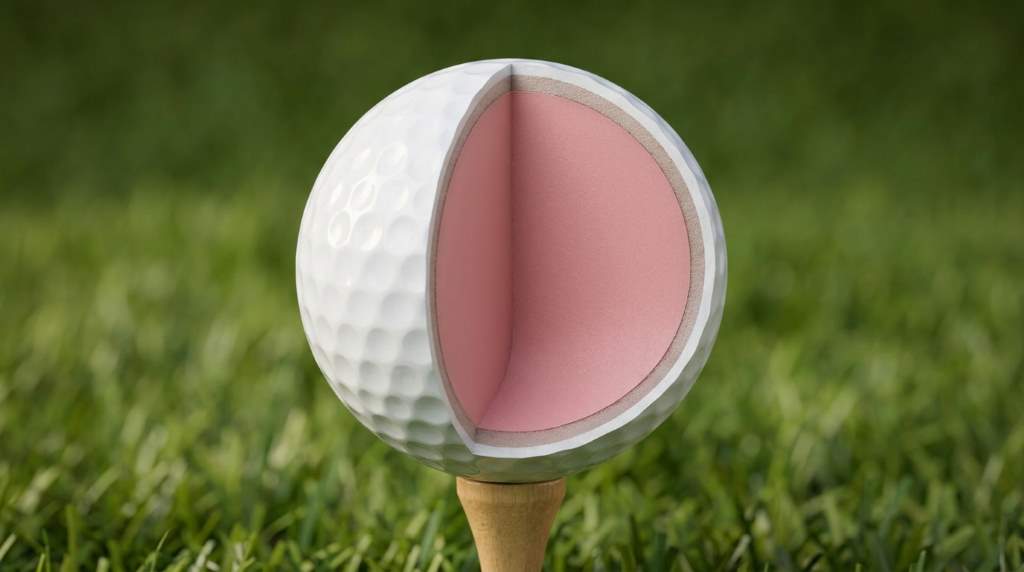
Distance+ uses a two-piece construction consisting of its core and cover. This simpler architecture supports the ball’s emphasis on speed and efficiency.
Multi-layer tour balls usually divide performance across several specialized layers. Those designs can improve greenside control, spin separation, and overall shot versatility.
However, distance balls do not need to optimize every category equally. Their simpler construction can focus resources on efficient energy transfer and long-game performance.
For recreational golfers, that tradeoff can make sense. Longer drives can create shorter approach shots and easier scoring opportunities throughout a round.
The Ionomer Cover Supports Everyday Distance Performance
Distance+ uses an ionomer cover rather than a tour-style urethane cover. Ionomer provides durability and supports the ball’s distance-focused design.
The cover also contributes to the ball’s feel around the green. However, golfers should not expect the same short-game response as premium urethane balls.
This difference creates an important buying consideration. If maximum driver distance matters most, the cover characteristics can work in your favor.
If greenside spin and delicate wedge control matter more, another ball category may fit better. Therefore, distance should never become the only selection criterion.
Where the Extra Yardage Actually Comes From
Golfers often expect a distance ball to create dramatic yardage gains automatically. In reality, the biggest improvement usually comes from better launch efficiency.
A suitable ball can reduce unwanted spin and preserve speed through flight. It can also provide a launch window that matches the golfer’s delivery.
For example, excessive driver spin can cause the ball to climb unnecessarily. That flight may sacrifice forward momentum and reduce total distance.
A distance-focused ball can help produce a more efficient trajectory. Nevertheless, golfers should verify the change using launch monitor data whenever possible.
Who Can Benefit Most From TaylorMade Distance+?
Moderate Swing-Speed Golfers
Golfers with moderate swing speeds often benefit from balls that compress efficiently. Distance+ offers a balanced compression profile for this type of player.
The combination of speed and softer feel can also make the ball easier to play consistently. Consistency matters because one exceptional drive cannot compensate for repeated poor strikes.
Golfers Seeking Affordable Distance
Distance+ targets golfers who want speed without paying premium tour-ball prices. That makes it especially practical for frequent recreational play.
Lower replacement costs also matter for golfers who lose several balls during a round. You can focus on performance without treating every lost ball as an expensive mistake.
Players Prioritizing Long Shots
Distance+ suits players who value driver and long-iron performance. Its construction emphasizes speed and aerodynamic efficiency across longer shots.
However, golfers who rely heavily on greenside spin should test alternatives. A longer ball is not automatically the best ball for every scoring style.
How It Compares With Other Distance Golf Balls
Competitor distance balls often emphasize similar concepts, including soft cores, low drag, and durable covers. The meaningful differences appear in compression, feel, launch, spin, and aerodynamic behavior.
| Golf Ball | Main Strength | Typical Positioning | Best Fit |
|---|---|---|---|
| TaylorMade Distance+ | Speed and distance | Value distance | Golfers prioritizing long shots |
| Callaway Supersoft | Soft feel and distance | Value distance | Golfers preferring softer feedback |
| Srixon Distance | Long-distance performance | Distance focused | Players wanting straightforward distance |
| Pinnacle Rush | Velocity and value | Budget distance | Frequent recreational players |
| Titleist Velocity | High-speed flight | Performance distance | Golfers seeking a firmer distance option |
This comparison reveals an important content gap in many distance-ball guides. They often discuss brand claims without explaining how compression, aerodynamics, and swing characteristics interact.
A better comparison starts with your measurable ball flight. Test several balls under similar conditions and record carry, total distance, launch, spin, and dispersion.
How to Test Whether Distance+ Adds Yardage
Use Consistent Testing Conditions
Start with the same driver, tee height, shaft, and swing setup. Then hit enough shots to remove obvious mishits from your comparison.
Ideally, use a launch monitor that measures ball speed, launch angle, spin, carry, and total distance. These measurements provide much stronger evidence than visual impressions alone.
Compare Carry and Total Distance
Carry distance tells you how far the ball travels before landing. Total distance includes the additional roll after the ball reaches the ground.
Both numbers matter, but carry usually provides a cleaner comparison. Excessive rollout can hide inefficient launch conditions on firm fairways.
Watch Dispersion Too
Distance means little if the ball consistently misses your intended target. A slightly shorter ball with tighter dispersion may produce better scores.
Therefore, record left-right dispersion alongside distance. The best ball should give you useful distance without creating unacceptable directional variation.
How Swing Speed Changes the Distance Equation
Golfers with slower swings may prioritize easy compression and launch. Meanwhile, faster swingers often need to control spin and trajectory more carefully.
That difference explains why one ball cannot maximize distance for every golfer. Your ideal ball depends on how your club delivers energy at impact.
Clubhead speed alone also fails to tell the complete story. Attack angle, centeredness of contact, dynamic loft, and face delivery influence the final flight.
For that reason, ball fitting should follow a complete equipment assessment. The goal involves optimizing the relationship between golfer, club, and ball.
Common Mistakes That Can Reduce Your Distance
- Choosing a ball solely because its packaging promises maximum distance.
- Ignoring launch and spin while comparing different golf balls.
- Testing balls with inconsistent swings and different club settings.
- Judging distance from one unusually strong or weak shot.
- Ignoring dispersion because one ball produces slightly longer drives.
- Expecting a golf ball to fix major swing or equipment problems.
The most common mistake involves expecting the ball to create speed without efficient contact. A golf ball can optimize energy transfer, but it cannot replace sound technique.
Likewise, golfers should avoid changing balls every few rounds. Give one model enough testing time to understand its consistent performance.
When a Distance Ball May Not Be Your Best Choice
Distance+ can make sense for many golfers, but some players need different priorities. Competitive players may value greenside spin, trajectory control, and shot-shaping more heavily.
Premium urethane balls often provide more sophisticated short-game performance. However, those benefits can come with higher prices and different distance characteristics.
Your handicap also should not determine your ball automatically. Instead, choose based on measurable performance and the shots you need most.
Practical Tips for Getting More Distance With Distance+
- Use a consistent tee height that supports your preferred driver launch.
- Strike the ball near the clubface center as consistently as possible.
- Measure launch and spin before changing equipment.
- Compare carry distance instead of relying only on rollout.
- Test performance during calm conditions before judging aerodynamic behavior.
- Replace heavily damaged balls when scuffs begin affecting flight consistency.
These steps help separate genuine equipment improvements from temporary swing changes. They also make your testing process more repeatable and useful.
Most importantly, focus on repeatable distance rather than your single longest drive. Your scoring improves when useful yardage becomes predictable.
Is the Added Yardage Worth It?
For the right golfer, yes, a distance-focused ball can produce useful additional yardage. The biggest gains usually come from better energy transfer and more efficient aerodynamic flight.
TaylorMade Distance+ combines those principles with a durable cover and accessible performance characteristics. Its 77 compression, REACT Speed Core, and 322-dimple pattern create a clear distance-oriented package.
Still, the ball should earn its place through testing rather than assumptions. Compare it against your current ball using identical clubs, swings, and measurable launch conditions.
Final Verdict
TaylorMade Distance+ adds yardage by combining efficient compression, high-energy core performance, and reduced aerodynamic drag. The result targets golfers who want more speed and distance without requiring a premium tour-ball design.
Its strongest advantage comes from matching the ball’s characteristics with your swing. If your current ball produces inefficient launch, excessive spin, or poor speed retention, Distance+ deserves testing.
Before switching permanently, compare carry, total distance, spin, launch, and dispersion across several sessions. Choose the ball that produces the most useful combination for your actual game.
Ready to find out whether it can add distance to your game? Test TaylorMade Distance+ against your current ball and let the launch data make the decision.
Frequently Asked Questions
Do TaylorMade Distance+ golf balls really add distance?
Yes, they can add distance when their compression, launch, spin, and aerodynamics suit your swing.
What compression is TaylorMade Distance+?
TaylorMade Distance+ uses a 77 compression rating designed to balance speed and soft feel.
Are TaylorMade Distance+ balls good for beginners?
Yes, their distance-focused construction, durable cover, and approachable feel suit many beginner golfers.
Does Distance+ spin a lot?
Distance+ prioritizes long-game performance, while its wedge-spin characteristics remain moderate to relatively high.
How should I test TaylorMade Distance+ for distance?
Compare carry, total distance, ball speed, launch, spin, and dispersion using consistent equipment and swing conditions.