
How to Choose the Best Golf Tees for Stability and Performance
Golf may seem like a game of big swings and powerful drives, but even the smallest details can make a significant difference in your performance. One often-overlooked piece of equipment is the humble golf tee. While it might seem insignificant, the right tee can improve your stability, accuracy, and even the distance of your drives. Choosing the best golf tees for your game is a simple yet effective way to enhance your performance on the course.
I remember the first time I switched from standard wooden tees to a more advanced, anti-slice model. My drives became straighter, and I noticed a slight increase in distance. It was a small change, but it made a noticeable difference in my confidence off the tee. If you’re looking to optimize every aspect of your game, exploring the best golf tees is a great place to start.
Why the Right Golf Tee Matters
A golf tee might seem like a minor accessory, but it plays a crucial role in your game. The right tee can influence the height of your tee shot, the stability of your ball, and even the direction of your drive. Using a tee that matches your swing and club choice can help you achieve more consistent and powerful shots.
Golf tees come in various lengths, materials, and designs, each offering unique benefits. For example, longer tees are ideal for drivers, while shorter tees work better with irons and hybrids. Additionally, some tees are designed to reduce friction, which can help increase distance and accuracy. According to golf equipment studies, even small improvements in tee design can lead to measurable gains in performance, especially for amateur golfers.
Types of Golf Tees
1. Wooden Tees
Wooden tees are the most traditional and widely used type. They are affordable, biodegradable, and come in various lengths to suit different clubs. Wooden tees are a great all-around option, but they can break easily, especially with repeated use or when hitting off hard surfaces.
Pros:
- Affordable and widely available
- Biodegradable and eco-friendly
- Suitable for all types of clubs
Cons:
- Can break easily, especially with powerful drives
- May not offer the same stability as other materials
2. Plastic Tees
Plastic tees are more durable than wooden tees and often feature unique designs to improve performance. Some plastic tees have flexible tops or anti-slice features to help reduce friction and promote straighter drives. They are also less likely to break, making them a cost-effective choice for frequent golfers.
Pros:
- Durable and long-lasting
- Often include performance-enhancing features
- Less likely to break compared to wooden tees
Cons:
- Not biodegradable, which may be a concern for eco-conscious golfers
- Can be more expensive than wooden tees
3. Bamboo Tees
Bamboo tees are an eco-friendly alternative to wooden and plastic tees. They are biodegradable, strong, and durable, making them a popular choice among golfers who prioritize sustainability. Bamboo tees are also less likely to splinter or break, offering a consistent tee height throughout your round.
Pros:
- Eco-friendly and biodegradable
- Strong and durable
- Less likely to splinter or break
Cons:
- Slightly more expensive than standard wooden tees
- May not be as widely available as other types
4. Rubber or Composite Tees
Rubber or composite tees are designed for maximum durability and performance. They often feature flexible tops or unique shapes to reduce resistance and promote longer, straighter drives. These tees are ideal for golfers who want to minimize friction and maximize distance.
Pros:
- Extremely durable and long-lasting
- Designed to reduce friction and improve performance
- Suitable for all club types
Cons:
- More expensive than wooden or plastic tees
- Not biodegradable
5. Anti-Slice Tees
Anti-slice tees are designed with a unique shape or flexible top to help reduce the sidespin that causes slices. These tees can help golfers achieve straighter drives and improve overall accuracy. They are particularly useful for golfers who struggle with a consistent slice or hook.
Pros:
- Helps reduce sidespin for straighter drives
- Can improve accuracy and consistency
- Suitable for golfers of all skill levels
Cons:
- May not be as effective for golfers with a neutral or draw bias
- Often more expensive than standard tees
Key Features to Consider
Length
The length of your tee plays a critical role in your tee shot. Different clubs require different tee heights to optimize performance:
- Driver: Use longer tees (3 to 4 inches) to tee the ball higher, promoting a higher launch angle and greater distance.
- Irons and Hybrids: Shorter tees (1.5 to 2.5 inches) are ideal for these clubs, as the ball should be teed lower to the ground.
- Fairway Woods: Medium-length tees (2 to 3 inches) work well, allowing the ball to sit just above the grass for clean contact.
Material
The material of your tee affects its durability, performance, and environmental impact. Wooden tees are traditional and eco-friendly but less durable. Plastic and composite tees offer enhanced durability and performance features but are not biodegradable. Bamboo tees provide a balance of durability and eco-friendliness.
Design and Performance Features
Many tees include design features to enhance performance:
- Flexible Tops: Reduce resistance at impact, promoting longer and straighter drives.
- Anti-Slice Designs: Help minimize sidespin for improved accuracy.
- Low-Friction Surfaces: Reduce drag on the ball, potentially increasing distance.
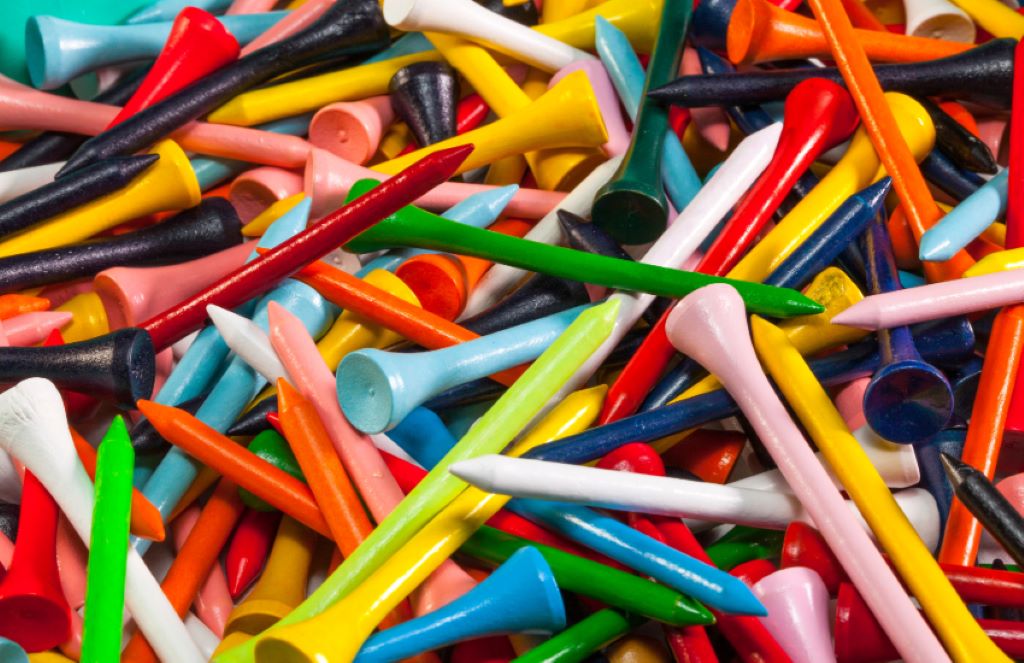
- Color-Coding: Some tees come in different colors to indicate length or performance features, making it easier to choose the right tee for each club.
Durability
Durability is an important consideration, especially if you play frequently. Plastic, composite, and bamboo tees tend to last longer than wooden tees, reducing the need for frequent replacements. However, durability often comes at a higher cost, so consider your budget and how often you play when choosing tees.
Eco-Friendliness
For golfers who prioritize sustainability, biodegradable tees made from wood or bamboo are the best choices. These tees break down naturally over time, reducing their environmental impact. Plastic and composite tees, while durable, are not biodegradable and can contribute to waste.
How to Choose the Right Golf Tee for Your Game
Assess Your Needs
Consider your typical tee shots and the clubs you use most often. If you primarily use a driver, longer tees will help you achieve the optimal launch angle. For irons and hybrids, shorter tees are more appropriate. If you struggle with a slice, anti-slice tees may help improve your accuracy.
Match Tee Length to Club
Using the correct tee length for each club is crucial for optimal performance. Here’s a quick guide:
- Driver: 3 to 4 inches
- Fairway Woods: 2 to 3 inches
- Irons and Hybrids: 1.5 to 2.5 inches
Consider Your Budget
Golf tees are available at various price points. Wooden tees are the most affordable, while plastic, composite, and specialty tees (like anti-slice models) are more expensive. Determine your budget and choose tees that offer the best balance of performance and cost.
Test Different Tees
Experiment with different types of tees to see which ones work best for your game. Pay attention to how each tee affects your ball flight, distance, and accuracy. You may find that certain tees perform better with specific clubs or in particular course conditions.
Prioritize Eco-Friendliness
If sustainability is important to you, opt for biodegradable tees made from wood or bamboo. These tees offer a more eco-friendly alternative to plastic and composite options, reducing your environmental footprint on the course.
Common Mistakes to Avoid
- Using the Wrong Length: Tees that are too short or too long for your club can negatively impact your shot. Always match the tee length to the club you’re using.
- Ignoring Tee Condition: Broken or worn tees can affect stability and performance. Replace tees that are damaged or show signs of wear.
- Overlooking Performance Features: Tees with flexible tops or anti-slice designs can improve your game. Don’t overlook these features when choosing tees.
- Not Considering the Environment: Plastic tees contribute to waste and are not biodegradable. If eco-friendliness is a priority, choose wooden or bamboo tees instead.
- Sticking to Tradition: While wooden tees are classic, modern materials and designs can offer significant performance benefits. Be open to trying new types of tees to see what works best for your game.
FAQs
What is the best length for a golf tee?
The best length depends on the club you’re using. For drivers, use tees that are 3 to 4 inches long. For fairway woods, opt for 2 to 3 inches, and for irons and hybrids, choose tees that are 1.5 to 2.5 inches long.
Are plastic tees better than wooden tees?
Plastic tees are more durable and often include performance-enhancing features like flexible tops or anti-slice designs. However, they are not biodegradable, which may be a concern for eco-conscious golfers. Wooden tees are biodegradable but less durable.
Do anti-slice tees really work?
Anti-slice tees are designed to reduce sidespin, which can help straighten your drives. While they may not eliminate a slice entirely, they can improve accuracy and consistency for golfers who struggle with this issue.
Can the type of tee affect my distance?
Yes, the type of tee can influence your distance. Tees with low-friction surfaces or flexible tops reduce resistance at impact, which can help increase the distance of your drives. Additionally, using the correct tee length for your club can optimize launch conditions for maximum distance.
Are bamboo tees eco-friendly?
Yes, bamboo tees are an eco-friendly option. They are biodegradable, strong, and durable, making them a sustainable choice for golfers who want to reduce their environmental impact.
Conclusion
Choosing the best golf tees for your game is a simple yet effective way to improve your performance on the course. By considering factors like length, material, and design features, you can find tees that enhance your stability, accuracy, and distance. Whether you prefer traditional wooden tees, durable plastic models, or eco-friendly bamboo options, the right tees can make a noticeable difference in your game.
Investing in quality tees is a small but impactful step toward optimizing every aspect of your golf game. Take the time to experiment with different types of tees to find the ones that work best for you.
Have you tried any specialty tees that improved your game? Share your experiences or favorite tees in the comments below! And if you found this guide helpful, don’t forget to share it with your fellow golfers.