
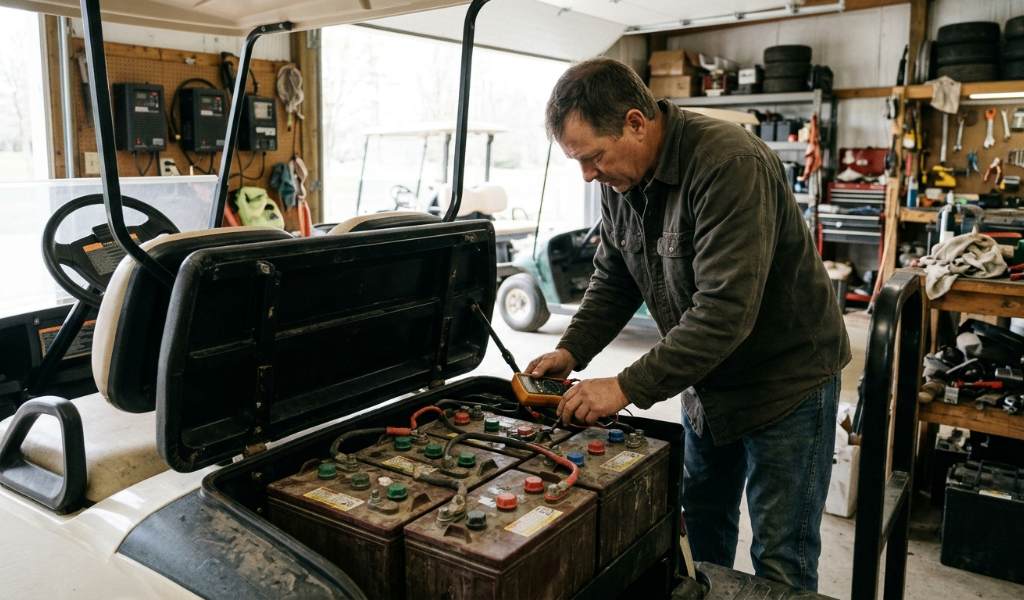
How Long Do Golf Cart Batteries Last?
Lead-acid golf cart batteries typically last four to six years with regular care. AGM and gel versions often stretch to six or seven years. Lithium golf cart batteries outperform both, frequently running 8 to 10 years or longer before they need replacing.
Golf cart owners ask this question for a simple reason: battery packs are the single most expensive part to replace on an electric cart. Knowing the real lifespan of each chemistry helps you plan ahead instead of guessing. It also helps you spot early warning signs before a battery strands you on the back nine.
This guide breaks down lifespan by battery type, explains what actually shortens or extends that lifespan, and shows you how to budget for eventual replacement. You will also find practical maintenance habits that golf cart owners often overlook.
Golf Cart Battery Lifespan At A Glance
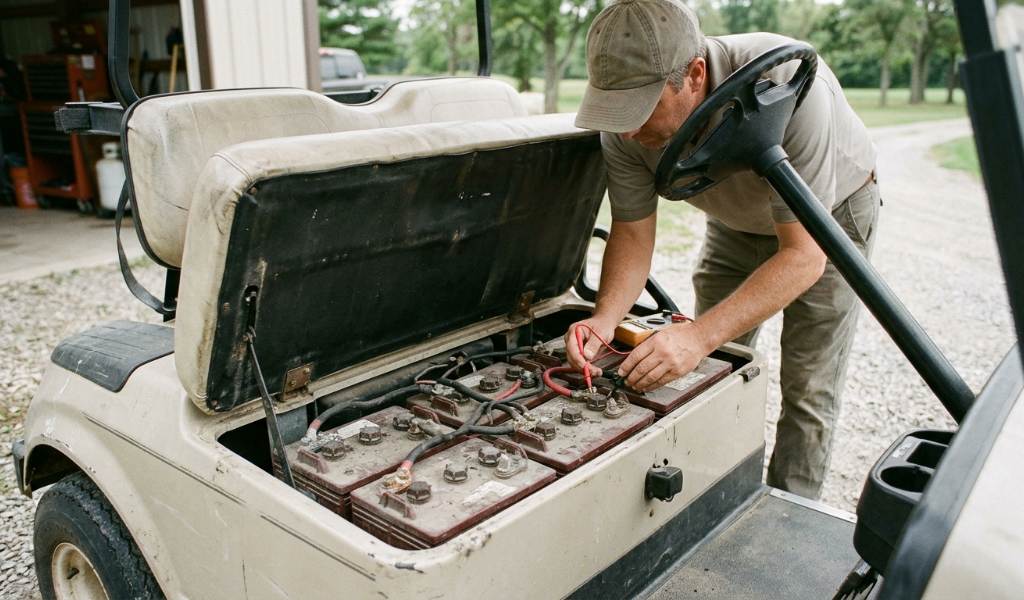
Different battery chemistries age at very different rates. Usage pattern and climate shift these numbers further. Here is a realistic range for each common type:
- Flooded lead-acid: 3 to 6 years
- AGM (absorbed glass mat): 4 to 7 years
- Gel lead-acid: 4 to 6 years
- Lithium iron phosphate (LiFePO4): 8 to 10 years, sometimes beyond
- Marine deep-cycle (occasionally used in carts): 4 to 6 years
These figures assume reasonably consistent charging and storage. A battery left to sit fully discharged for weeks will age far faster than these averages suggest.
Lead-Acid Golf Cart Batteries: What To Expect
Lead-acid remains the most common battery type in golf carts worldwide. It costs less upfront, which keeps it popular with budget-conscious owners and rental fleets. Its tradeoff is a shorter service life and a heavier maintenance routine.
Flooded Lead-Acid Batteries
Flooded lead-acid batteries use removable caps that expose the electrolyte inside. Owners must top off distilled water periodically to prevent plate damage. With consistent watering and charging, these batteries commonly reach 3 to 5 years, occasionally stretching past 6.
Skipping water checks is the fastest way to kill a flooded battery early. Exposed plates corrode quickly once electrolyte levels drop too low. Many carts that die within two years suffered from neglected watering, not a defective battery.
AGM Batteries
AGM batteries seal the electrolyte in a fiberglass mat instead of free liquid. This design eliminates watering and reduces spill risk entirely. AGM packs typically last 4 to 7 years and tolerate vibration better than flooded designs.
The sealed construction also means less terminal corrosion over time. That makes AGM a popular upgrade for owners who want lower maintenance without jumping straight to lithium. Expect a higher purchase price than flooded batteries in exchange for that convenience.
Gel Batteries
Gel batteries thicken the electrolyte into a paste rather than a liquid. They resist deep discharge damage slightly better than flooded designs. Expect a working life of 4 to 6 years under normal golf cart use.
Gel batteries are sensitive to overcharging, more so than AGM or flooded types. A charger that is not matched to gel chemistry can shorten lifespan dramatically. Always confirm charger compatibility before installing a gel battery set.
Lithium Golf Cart Batteries: The Long-Haul Option
Lithium iron phosphate batteries have reshaped expectations for golf cart ownership. A quality LiFePO4 pack often delivers 8 to 10 years of service, and some owners report well beyond a decade. That longevity comes from a battery chemistry that tolerates thousands of charge cycles without major capacity loss.
Lithium packs also hold a flatter discharge curve than lead-acid. That means your cart keeps consistent power and speed right up until the battery nears empty, instead of slowing gradually. Charging is faster too, often cutting wait time by half compared with a flooded lead-acid bank.
The upfront cost is the main drawback. A lithium conversion runs well above a comparable lead-acid set. Over the full ownership period, though, the lower maintenance and longer service life often close that cost gap considerably.
How Far Will A Charge Take You
Lifespan in years only tells part of the story. Most golf cart owners also care about daily range. A fully charged golf cart battery generally delivers 25 to 40 miles before it needs recharging.
That range covers several rounds of golf for most recreational users. Hilly terrain, heavier loads, and aggressive acceleration all pull that number down. Lithium packs tend to hold usable range more consistently as the charge drops, while lead-acid output tapers earlier.
What Actually Determines Battery Lifespan
Two carts with identical batteries can age at completely different rates. The difference almost always comes down to how the owner treats the pack day to day.
Charging Habits
Frequent partial charges beat occasional deep discharges for lead-acid batteries. Letting a lead-acid pack sit discharged allows sulfation to build on the plates. Sulfation permanently reduces capacity and shortens overall lifespan.
Lithium batteries handle partial charging far better and do not suffer sulfation at all. Even so, avoid leaving any battery type sitting at zero charge for extended periods. A smart charger that stops automatically protects against overcharging damage too.
Depth Of Discharge
Running a battery down to empty repeatedly stresses the internal plates or cells. Most manufacturers recommend keeping discharge around 50 percent for lead-acid packs. Lithium batteries tolerate deeper discharge cycles with far less long-term wear.
Shallow, frequent cycles extend battery life more than infrequent deep ones. This matters most for daily commuters and rental fleet carts that see constant use. Spreading charging sessions out reduces cumulative stress on the cells.
Climate And Storage
Extreme heat accelerates chemical degradation inside any battery type. Extreme cold temporarily reduces available capacity and can damage cells if charged while frozen. The ideal storage range sits between roughly 50 and 85 degrees Fahrenheit.
Garages and covered carports protect batteries from both direct sun and frost. Carts stored outdoors year-round typically see noticeably shorter battery lifespans. Seasonal users should also consider a maintenance charger during long off-periods.
Maintenance Routine
Clean terminals conduct power more efficiently and resist corrosion buildup. A simple baking soda and water solution removes most terminal corrosion safely. Checking water levels monthly keeps flooded lead-acid batteries performing at full capacity.
Loose cable connections create resistance that strains the entire battery bank. Tightening terminals during routine checks prevents uneven wear across cells. A five-minute monthly inspection catches most problems before they become expensive.
Signs Your Golf Cart Battery Is Failing
Golf cart batteries rarely fail without warning. Watch for these common indicators as a pack nears the end of its service life:
- Noticeably shorter range per charge than when the batteries were new
- Sluggish acceleration, especially when climbing hills
- Charging times that stretch longer than usual
- Visible corrosion, swelling, or leaking around terminals
- A battery age of 4 years or more combined with any performance drop
Catching these signs early lets you plan a replacement on your own timeline. Waiting until a battery fails completely often means an inconvenient breakdown at the worst moment.
How To Stretch Every Extra Year Out Of Your Batteries
A few consistent habits add real years to any golf cart battery pack. None of these require special tools or significant time investment.
- Charge after every use rather than letting the cart sit discharged
- Check and top off water levels monthly on flooded lead-acid batteries
- Store the cart in a temperature-controlled space whenever possible
- Clean terminals and tighten connections every few months
- Use a charger matched specifically to your battery chemistry
- Avoid routinely draining the battery below 20 percent remaining capacity
These steps cost almost nothing beyond a bit of regular attention. Owners who follow them consistently often beat the average lifespan for their battery type by a meaningful margin.
Lead-Acid Vs Lithium: Which Lasts Longer For The Money
Lead-acid wins on upfront price, costing significantly less to purchase initially. Lithium wins decisively on total lifespan, often doubling or tripling the years of service. Lithium also demands far less ongoing maintenance, which saves time as well as money.
For owners who keep a cart for many years or run it daily, lithium usually pays for itself through fewer replacement cycles. For occasional or seasonal users with a tighter budget, a well-maintained lead-acid set can still deliver solid value. The right choice depends on usage frequency, storage conditions, and how long you plan to keep the cart.
Replacement Cost And When It Pays To Switch
A full lead-acid replacement set typically costs between roughly $600 and $1,800, depending on voltage and battery count. A complete lithium conversion generally runs higher, often landing between about $1,500 and $4,000 once a compatible charger is included. Installation labor, if you skip the DIY route, usually adds another $75 to $400.
Owners replacing a second or third lead-acid set within a decade often find the math favors lithium. Fewer replacements over time offset the higher initial lithium price for many drivers. Getting quotes for both options before deciding helps you compare real numbers against your own usage pattern.
Final Thoughts
Golf cart battery lifespan comes down to chemistry, charging habits, and how well you maintain the pack. Lead-acid batteries offer a lower entry price but ask for more attention and deliver fewer years. Lithium batteries cost more upfront yet reward owners with longer service life and far less upkeep.
Whichever type sits under your seat right now, consistent charging and basic maintenance will always extend its working years. Check your battery’s age and watch for the warning signs covered above. If your pack is already past the 4 to 6 year mark and losing range, start comparing replacement options today so you are not caught off guard on the course.
Frequently Asked Questions
How often should I charge my golf cart battery?
Charge the battery after every use, even short trips, rather than letting it sit discharged.
Can I mix old and new golf cart batteries in the same pack?
No, mixing battery ages creates uneven charging and shortens the life of the newer units.
Do golf cart batteries need water even if they rarely get used?
Yes, flooded lead-acid batteries lose water through evaporation regardless of actual usage.
Is it worth converting an old lead-acid cart to lithium?
Often yes, especially for frequent users, since lithium’s longer lifespan can offset the higher upfront cost.
Why does my golf cart battery die faster in winter?
Cold temperatures temporarily reduce usable capacity and slow the chemical reactions inside the battery.